
Introduction
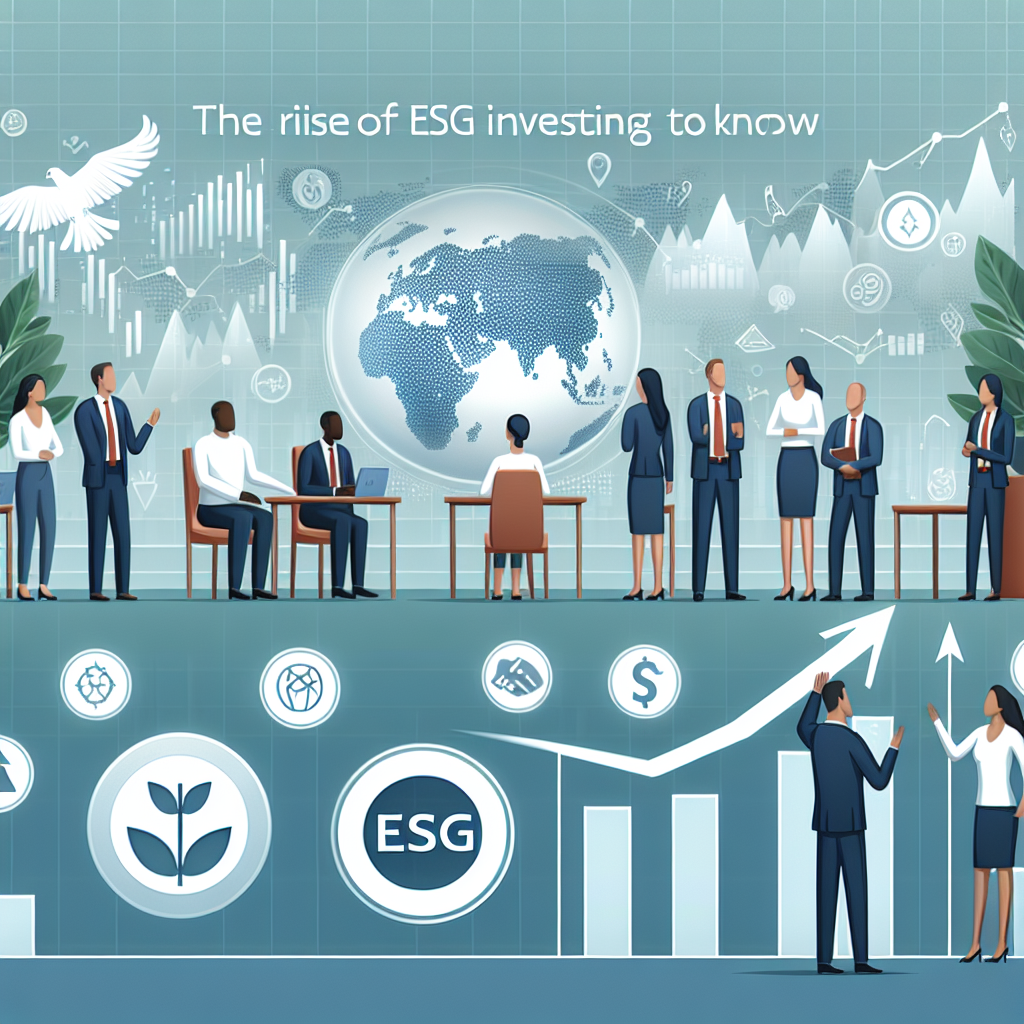
The world of investing is undergoing a significant paradigm shift. A growing number of investors are no longer satisfied with just financial returns; they want their investments to reflect their personal beliefs and contribute to social and environmental change. This shift has given rise to Environmental, Social, and Governance (ESG) investing. In this blog post, we delve into the rise of ESG investing and discuss what businesses need to know about this emerging trend.
Understanding ESG Investing
ESG investing, also known as sustainable investing, involves considering environmental, social, and governance factors alongside financial factors in the investment decision-making process. This approach helps investors align their investments with their values, mitigate risks, and potentially achieve long-term returns.
Environmental factors include a company’s energy use, waste, pollution, natural resource conservation, and treatment of animals. Social factors examine how it manages relationships with employees, suppliers, customers, and the communities where it operates. Governance deals with a company’s leadership, executive pay, audits, internal controls, and shareholder rights.
The Rise of ESG Investing
ESG investing is not a new concept, but its popularity has surged in recent years. According to the Global Sustainable Investment Alliance, ESG investments grew to $30.7 trillion in the five major markets at the start of 2018, a 34% increase in two years.
Several factors have contributed to this rise. Firstly, there is a growing awareness about the environmental and social challenges facing the world today, such as climate change, income inequality, and corporate governance issues. Secondly, investors are increasingly recognizing that ESG factors can have a material impact on a company’s financial performance. For example, a company with poor environmental practices may face regulatory fines, reputational damage, and lost business opportunities, which could negatively impact its financial performance.
What This Means for Businesses
The rise of ESG investing has significant implications for businesses. Companies that fail to pay attention to ESG factors may find it harder to attract investment, retain talent, and maintain their social license to operate.
On the other hand, companies that proactively address ESG issues can reap several benefits. These include enhanced reputation, improved risk management, increased customer loyalty, and access to capital from ESG-focused investors.
According to a study by the Boston Consulting Group, companies with strong ESG practices can achieve higher market valuations and profit margins. Another study by the University of Oxford found that companies with robust sustainability practices demonstrate better operational performance and are less risky.
Practical Steps for Businesses
Given the increasing importance of ESG factors in investment decisions, businesses should consider the following steps:
- Understand the ESG landscape: Businesses should educate themselves about the key ESG issues in their industry and how these issues can affect their financial performance and reputation.
- Develop an ESG strategy: Businesses should develop a clear ESG strategy that aligns with their business goals and stakeholder expectations. This strategy should include specific, measurable targets and a plan for achieving them.
- Communicate effectively: Businesses should communicate their ESG efforts to their stakeholders in a clear and transparent manner. This includes disclosing both their successes and their challenges.
- Engage with stakeholders: Businesses should engage with their stakeholders, including investors, employees, customers, and communities, to understand their ESG expectations and concerns.
Conclusion
The rise of ESG investing represents a significant shift in the investment landscape, and businesses cannot afford to ignore it. By understanding the ESG landscape, developing an effective ESG strategy, communicating effectively, and engaging with stakeholders, businesses can not only meet the expectations of ESG-focused investors but also build a more sustainable and successful business.